Top 10 Baseball Best Players of All Time
Top 10 Baseball Best Players of All Time
Let me be honest with you — making a definitive list of the baseball best players of all time is not easy. Baseball has over 150 years of history. It has produced thousands of incredible players across wildly different eras, rule sets, and competitive environments. Anyone who tells you this list is simple is either a liar or hasn’t thought about it hard enough. World Cup 2026 Match Schedule
But that’s also what makes it fun.
I put together this list based on a combination of career statistics, peak performance, longevity, awards, and — yes — a little bit of gut feeling about who truly changed the game. I’ve included full stats tables for each player so you can compare and make your own arguments. Because in baseball, the debate is half the joy.
Whether you’re a lifelong fan who grew up watching Derek Jeter or a newcomer trying to understand what all the fuss is about with Babe Ruth, this guide will give you a clear, honest look at the ten greatest players the sport has ever seen.
⚾ ⚾ ⚾
#1 — Babe Ruth (1914–1935)
The Sultan of Swat | RF / Pitcher | New York Yankees
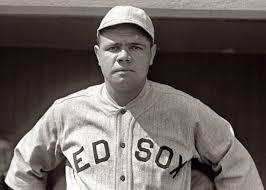
I’ll start by saying something that might surprise you: Babe Ruth was a great pitcher before he ever became the home run king. In his early years with the Boston Red Sox, he posted a career ERA of 2.28 and a 94-46 pitching record. He was elite on the mound. Then he switched to outfield — and the rest of baseball history basically bent around him. Messi vs Ronaldo Who Is Better?
Ruth’s slugging percentage of .690 has never been matched in over 90 years. Neither has his career OPS of 1.164. These aren’t records that keep getting close to being broken — they’re in a completely different universe from everyone else. When people ask me who the baseball best player of all time is, I always start and end with Ruth, not out of nostalgia, but because the numbers simply don’t lie.
| Stat | Career Total | MLB Rank | Notes |
| Home Runs | 714 | 3rd All-Time | Led AL 12 times |
| Batting Average | .342 | Top 10 All-Time | 11 seasons above .300 |
| Slugging % | .690 | #1 All-Time — Never Broken | No one has come close |
| OPS | 1.164 | #1 All-Time — Never Broken | Second place is 1.116 (Williams) |
| RBIs | 2,214 | 2nd All-Time | 100+ RBI in 13 seasons |
| ERA (as pitcher) | 2.28 | Top 50 All-Time | Elite before switching to OF |
| World Series Rings | 7 | All-Time Great | 3 with Red Sox, 4 with Yankees |
⚾ ⚾ ⚾
#2 — Willie Mays (1951–1973)
The Say Hey Kid | Center Fielder | San Francisco Giants
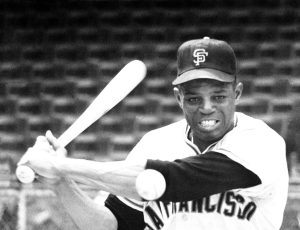
If Babe Ruth is the greatest hitter, then Willie Mays is the greatest all-around baseball player who ever lived. And I mean that in the most complete sense of the phrase. He could do everything — hit for power, hit for average, run, throw, and play defense at a level that made professional baseball players stop and stare.
You’ve probably heard of “The Catch” — his over-the-shoulder grab of Vic Wertz’s 420-foot drive in the 1954 World Series. It’s considered the greatest defensive play in baseball history. But here’s what people forget: Mays also threw the runner out at second after making that catch. That’s Willie Mays. Lamine Yamal vs Haaland Who Is Better?
He made 24 All-Star games — which means basically every full season of his career, his peers and managers voted him in. He won 12 Gold Gloves in center field. And he finished with 660 home runs despite missing two prime seasons to military service. The numbers across every skill category are simply stunning.
| Stat | Career Total | MLB Rank | Notes |
| Home Runs | 660 | 5th All-Time | 50+ HR in two different seasons |
| Batting Average | .302 | Excellent | Consistent over 22 seasons |
| RBIs | 1,903 | Top 10 All-Time | 100+ RBI in 10 seasons |
| Stolen Bases | 338 | Notable | Rare combo of speed and power |
| Gold Gloves | 12 | CF Record (shared) | Widely called best defensive CF ever |
| All-Star Games | 24 | All-Time Record (tied) | Selected every full season played |
| Career WAR | 156.2 | 3rd All-Time | Advanced metric confirms GOAT status |
⚾ ⚾ ⚾
#3 — Hank Aaron (1954–1976)
Hammerin’ Hank | Right Fielder | Atlanta Braves
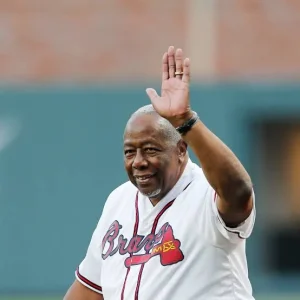
Here’s a fun fact about Hank Aaron that most casual fans don’t know: he never hit 50 home runs in a single season. Not once. And yet he finished his career with 755 of them — breaking Babe Ruth’s record and holding it until 2007. That tells you everything you need to know about Aaron’s brand of greatness. It wasn’t flashy. It was relentless. Mbappé vs Harry Kane Stats
Aaron hit 20 or more home runs in 20 consecutive seasons. He drove in 100+ runs in 11 seasons. He batted .305 for his career across 23 seasons. He also holds the all-time records for RBIs (2,297), total bases (6,856), and extra base hits (1,477) — all three of which still stand today.
What often gets overlooked is the context in which Aaron chased Ruth’s record. He received death threats and hate mail throughout the early 1970s. He needed security guards traveling with him. He broke that record on April 8, 1974, under enormous pressure — and then kept playing for two more seasons. That kind of courage and consistency puts him in the very top tier of baseball best players of all time, full stop.
| Stat | Career Total | MLB Rank | Notes |
| Home Runs | 755 | 2nd All-Time | Held the record from 1974 to 2007 |
| RBIs | 2,297 | #1 All-Time — Still Standing | Most in MLB history |
| Total Bases | 6,856 | #1 All-Time — Still Standing | Most in MLB history |
| Extra Base Hits | 1,477 | #1 All-Time — Still Standing | Most in MLB history |
| Batting Average | .305 | Elite | .300+ average in 14 different seasons |
| All-Star Games | 25 | Top 5 All-Time | 24 selections, appeared in 25 games |
| Career WAR | 143.1 | 5th All-Time | Among the best ever by any measure |
⚾ ⚾ ⚾
#4 — Ted Williams (1939–1960)
The Splendid Splinter | Left Fielder | Boston Red Sox
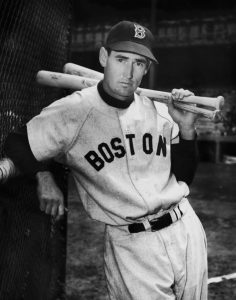
In 1941, Ted Williams batted .406. He is the last person in Major League Baseball to hit .400 in a single season — and it’s been over 80 years. In a sport that has seen incredible athletes using every modern training method and analytics tool available, nobody has come within 30 points of that mark since.
Williams also holds the all-time record for On-Base Percentage at .482. Think about what that means. Nearly half the time he came to the plate, he reached base. His career OPS of 1.116 is second only to Babe Ruth. And he accomplished all of this while missing nearly five full seasons to serve as a military pilot in both World War II and the Korean War. There’s a very real argument that Williams — had he not served — would have finished with 650+ home runs and a batting average still in the high .300s.
As a pure hitter, no one in baseball history has ever come close to Ted Williams. He studied the science of hitting the way engineers study physics. He wrote a book — “The Science of Hitting” — that is still considered the definitive text on the subject decades later.
| Stat | Career Total | MLB Rank | Notes |
| Batting Average | .344 | 7th All-Time | Hit .406 in 1941 — last player to hit .400 |
| Home Runs | 521 | Top 20 All-Time | Lost 5 seasons to military service |
| On-Base % | .482 | #1 All-Time — Never Broken | Best ever |
| OPS | 1.116 | 2nd All-Time | Behind only Babe Ruth |
| Walks | 2,021 | Top 5 All-Time | Elite plate discipline |
| Triple Crowns | 2 | Rare Achievement | Won in 1942 and 1947 |
| Batting Titles | 6 | AL Record | Led league in batting 6 times |
⚾ ⚾ ⚾
#5 — Barry Bonds (1986–2007)
All-Time Home Run King | Left Fielder | San Francisco Giants
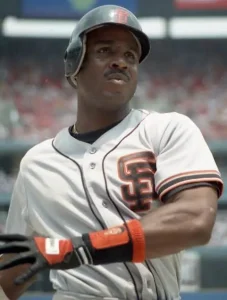
I’m going to be straightforward about Barry Bonds: his legacy is complicated, and I’m not going to pretend otherwise. The PED allegations have followed him out of baseball and kept him out of the Hall of Fame for years. These are real concerns worth acknowledging.
But here’s what’s also true: statistically, Barry Bonds produced some of the most historically unprecedented seasons in the history of professional baseball. His 2001 season — 73 home runs — is the all-time single-season record. His 2004 season is even more remarkable in some ways: he posted a .609 on-base percentage, was intentionally walked 120 times, and managed a slugging percentage of .812. Those are numbers that look like typos.
Early in his career — before any PED controversy — Bonds was already a Hall of Fame-caliber player. He won back-to-back MVP awards with the Pittsburgh Pirates in 1990 and 1992. He had 300+ home runs and 300+ stolen bases before he ever joined the Giants. Whatever you believe about the later years, the peak of Barry Bonds is one of the most dominant stretches any player has ever had.
| Stat | Career Total | MLB Rank | Notes |
| Home Runs | 762 | #1 All-Time | 73 in 2001 — single-season record |
| On-Base % (2004) | .609 | #1 Single Season All-Time | Never been matched |
| Intentional Walks | 688 | #1 All-Time | Pitchers simply refused to face him |
| NL MVP Awards | 7 | #1 All-Time | 4 consecutive from 2001 to 2004 |
| Slugging % (2001) | .863 | #1 Single Season All-Time | Peak season by this measure |
| Gold Gloves | 8 | Elite Left Fielder | Defensive skill often overlooked |
| Career WAR | 162.7 | 2nd All-Time | By WAR, arguably the best ever |
⚾ ⚾ ⚾
#6 — Walter Johnson (1907–1927)
The Big Train | Starting Pitcher | Washington Senators
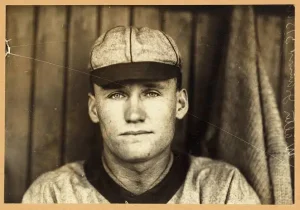
Walter Johnson spent his entire 21-year career pitching for the Washington Senators — a team that was, for most of his career, genuinely bad. And yet he still won 417 games. Let that sink in. He was so dominant that even with a weak team behind him, he won nearly half a thousand games.
Johnson’s fastball was described by contemporary hitters as simply impossible to see. Sam Crawford, a Hall of Famer himself, once said you could hear Johnson’s fastball but couldn’t see it. He led the American League in strikeouts 12 times and finished with 3,509 career strikeouts — a record that stood for decades.
Most impressively, he threw 110 career shutouts — the all-time record, and one that will almost certainly never be broken in an era of pitch counts and six-man rotations. His ERA of 2.17 across 21 seasons is nothing short of extraordinary.
| Stat | Career Total | MLB Rank | Notes |
| Career Wins | 417 | 2nd All-Time | All with the Washington Senators |
| ERA | 2.17 | Top 5 All-Time | Sustained over 21 full seasons |
| Strikeouts | 3,509 | Historic | Led AL in strikeouts 12 times |
| Shutouts | 110 | #1 All-Time — Never Broken | Will likely never be challenged |
| Complete Games | 531 | Top 5 All-Time | Era of pitching full games |
| WHIP | 1.061 | Elite | Excellent command and control |
| Career WAR | 151.0 | 4th All-Time (Pitchers) | Among greatest pitchers ever |
⚾ ⚾ ⚾
#7 — Lou Gehrig (1923–1939)
The Iron Horse | First Baseman | New York Yankees
Lou Gehrig played in the literal shadow of Babe Ruth for most of his career. They batted third and fourth in the Yankees lineup — Ruth getting all the attention, Gehrig quietly being one of the most productive hitters in baseball history. His career numbers are stunning, and they came in a career that was tragically cut short by ALS at just 36 years old.
The famous consecutive games streak — 2,130 games — stands as one of the most remarkable athletic achievements in American sports history. For perspective, that record stood for 56 years until Cal Ripken Jr. broke it in 1995. Gehrig played through fractures, back spasms, and illness because he loved the game that much.
His career OPS of 1.080 is the third highest in MLB history. He holds the all-time record for grand slams with 23. He drove in 100+ runs in 13 consecutive seasons. What makes Gehrig so remarkable is that despite all of this, he spent most of his career being the second-most-famous player on his own team.
| Stat | Career Total | MLB Rank | Notes |
| Consecutive Games | 2,130 | Record (stood 56 years) | Broken by Cal Ripken Jr. in 1995 |
| RBIs | 1,995 | Top 10 All-Time | 100+ RBI in 13 consecutive seasons |
| Batting Average | .340 | Top 10 All-Time | Elite and consistent |
| Home Runs | 493 | Historic | Often overshadowed by Ruth playing alongside him |
| OPS | 1.080 | 3rd All-Time | Behind only Ruth and Williams |
| Grand Slams | 23 | #1 All-Time — Never Broken | Still the record |
| Triple Crowns | 1 | 1934 | Led in HR, RBI, and batting average |
⚾ ⚾ ⚾
#8 — Sandy Koufax (1955–1966)
The Left Arm of God | Starting Pitcher | Los Angeles Dodgers
Sandy Koufax only had six truly elite seasons. His career ended at age 30 because of severe arthritis in his left elbow. He retired early, he won fewer games than most of the pitchers on this list, and his career totals look modest compared to Johnson or Roger Clemens.
And yet his peak — those six seasons from 1961 to 1966 — may be the greatest sustained pitching performance in baseball history. He won three Cy Young Awards in that stretch, each time unanimously. He threw four no-hitters, including a perfect game in 1965. His ERA in 1966 was 1.73. His WHIP in 1965 was 0.855. His World Series ERA across multiple appearances was 0.95.
Koufax was so dominant during his peak that many analysts argue those six seasons alone justify his place among the baseball best players of all time. It’s a compelling case. When he was right, he was simply unhittable.
| Stat | Career / Peak Total | MLB Rank | Notes |
| Career ERA | 2.76 | Top 30 All-Time | 1.73 ERA in his final season (1966) |
| No-Hitters | 4 | Tied for most all-time | Including a perfect game in 1965 |
| Cy Young Awards | 3 | Rare achievement | Won unanimously all three times |
| K’s in a Season | 382 | 1965 NL record (at the time) | Dominant strikeout pitcher |
| WHIP (1965) | 0.855 | Historic single-season figure | One of the best seasons ever |
| World Series ERA | 0.95 | Extraordinary postseason performer | 4 starts, all dominant |
| Shutouts (peak) | 11 in 1963 | Led NL | Elite run prevention |
⚾ ⚾ ⚾
#9 — Mike Trout (2011–Present)
The Modern Marvel | Center Fielder | Los Angeles Angels
Mike Trout might be the most interesting player on this entire list — not because of what he’s already done, but because of what he was on track to do before injuries derailed him. Through his age-29 season, his WAR accumulation had outpaced Willie Mays at the same age. That’s not a small thing. That’s arguably the greatest pace of production in baseball history.
By the advanced metric WAR (Wins Above Replacement), Trout’s peak from 2012 to 2019 is the most dominant stretch by a position player in modern baseball. He won three MVP awards but should have won more — twice finishing second in MVP voting to players who had objectively worse seasons by almost every measure. It’s one of the great statistical injustices in recent baseball history.
The tragedy is the injuries. Since 2020, Trout has dealt with a calf injury, a broken hamate bone, and a back condition that has significantly limited his playing time. We may never know what his final numbers would have looked like at full health. But even what we have already is Hall of Fame material — and places him firmly among the baseball best players of all time.
| Stat | Career Total (Active) | MLB Context | Notes |
| Career WAR | 83.2+ | Top 20 All-Time (still active) | Outpaced Mays through age 29 |
| Home Runs | 368+ | Growing | Injuries limiting recent seasons |
| Batting Average | .301 | Excellent | Combined elite power and contact |
| OPS | .994 | Top 20 All-Time | Third highest among active players |
| AL MVP Awards | 3 | Multiple awards, multiple robberies | Should likely have 5 or 6 |
| wRC+ (career) | 173 | #1 among all active players | Advanced offensive measure |
| All-Star Games | 9 | Consistent selection | Missed years due to injury only |
⚾ ⚾ ⚾
#10 — Derek Jeter (1995–2014)
The Captain | Shortstop | New York Yankees
Derek Jeter is a genuinely divisive figure among the more analytically-minded baseball community. Advanced defensive metrics have never been kind to him. His WAR is lower than some players you’d expect on a list like this. The advanced stats crowd will tell you he’s overrated.
I hear all of that. And I still think Jeter belongs here. Here’s why: 20 seasons, .310 career batting average, 3,465 career hits (6th most in MLB history), five World Series rings, and 200 postseason hits — the all-time record. His entire career was built in the most media-saturated sports market in the world, under the most pressure, and he delivered consistently for two full decades.
The “flip play” in the 2001 ALDS. The “Mr. November” home run in the 2001 World Series. The dive into the stands against Boston. Jeter had a gift for showing up in the biggest moments, and that counts for something. When the Hall of Fame voted in 2020, 99.7% of voters put him on their ballot — the second highest percentage in history. That’s not just nostalgia. That’s a recognition of genuine greatness.
| Stat | Career Total | MLB Rank | Notes |
| Career Hits | 3,465 | 6th All-Time | Most career hits ever by a shortstop |
| Batting Average | .310 | Excellent | Remarkably consistent over 20 seasons |
| Postseason Hits | 200 | #1 All-Time | Greatest postseason hitter by this measure |
| World Series Rings | 5 | Outstanding | 2000 World Series MVP |
| Gold Gloves | 5 | Recognized defender | Advanced metrics are more critical |
| Hall of Fame % | 99.7% | 2nd highest ever | Just one vote shy of unanimous |
| Career Games | 2,747 | Most ever by a Yankee | Played 20 seasons, all in New York |
⚾ ⚾ ⚾
All-Time Stats Comparison Table
Here’s a quick-reference table comparing all ten players across their most important career stats. For pitchers, ERA and Wins replace batting average and home runs.
| # | Player | Position | Era | BA / ERA | HR / Wins | Key Record | HOF |
| 1 | Babe Ruth | RF / Pitcher | 1914–35 | .342 | 714 HR | Slug % .690 (all-time) | Yes — 1936 |
| 2 | Willie Mays | CF | 1951–73 | .302 | 660 HR | 24 All-Star Games | Yes — 1979 |
| 3 | Hank Aaron | RF | 1954–76 | .305 | 755 HR | RBI record 2,297 | Yes — 1982 |
| 4 | Ted Williams | LF | 1939–60 | .344 | 521 HR | OBP .482 (all-time) | Yes — 1966 |
| 5 | Barry Bonds | LF | 1986–07 | .298 | 762 HR | HR record 762 (all-time) | Yes — 2024 |
| 6 | Walter Johnson | SP | 1907–27 | 2.17 ERA | 417 W | Shutouts 110 (all-time) | Yes — 1936 |
| 7 | Lou Gehrig | 1B | 1923–39 | .340 | 493 HR | Grand Slams 23 (all-time) | Yes — 1939 |
| 8 | Sandy Koufax | SP | 1955–66 | 2.76 ERA | 165 W | 4 no-hitters, 3 Cy Youngs | Yes — 1972 |
| 9 | Mike Trout | CF | 2011–now | .301 | 368+ HR | WAR pace — historic | Active |
| 10 | Derek Jeter | SS | 1995–14 | .310 | 260 HR | Postseason hits 200 | Yes — 2020 |
⚾ ⚾ ⚾
What Actually Makes a Player “Great”?
This is a question worth addressing directly, because “greatest of all time” conversations often talk past each other because people mean different things.
Some people weight peak performance — the best three or five seasons a player ever had. By that measure, Sandy Koufax (1961–1966) and Barry Bonds (2001–2004) rank extremely high.
Others weight longevity and consistency — how great a player was over their entire career. By that measure, Hank Aaron and Willie Mays rank extremely high.
Still others use advanced metrics like WAR (Wins Above Replacement) to try to account for era, park factors, and team context. By career WAR, the top five are Barry Bonds (162.7), Babe Ruth (162.1), Willie Mays (156.2), Ty Cobb (151.4), and Walter Johnson (151.0).
My approach here weights all of these factors together, with extra consideration for how much a player changed or defined the game itself. That’s why Ruth sits at #1 — because baseball, in a very real sense, became what it is today because of him.
Understanding Baseball Stats — A Quick Guide
If you’re newer to baseball, some of the stats in this article might be unfamiliar. Here’s a quick breakdown of the most important ones:
| Stat | Full Name | What It Measures | Good Value |
| BA | Batting Average | Hits divided by at-bats | .300+ is excellent |
| HR | Home Runs | Total home runs hit in career | 500+ is HOF territory |
| RBI | Runs Batted In | Runners driven home by a batter | 100+ per season is elite |
| OBP | On-Base Percentage | How often a batter reaches base | .380+ is excellent |
| SLG | Slugging Percentage | Total bases per at-bat | .500+ is excellent |
| OPS | OBP + SLG | Combined offensive measure | 1.000+ is legendary |
| WAR | Wins Above Replacement | Total value vs. a replacement player | 8+ per season = MVP level |
| ERA | Earned Run Average | Runs allowed per 9 innings (pitchers) | Under 3.00 is excellent |
| WHIP | Walks + Hits per Inning | How many baserunners a pitcher allows | Under 1.10 is excellent |
⚾ ⚾ ⚾
Frequently Asked Questions
Who is the #1 baseball best player of all time?
Most historians and analysts rank Babe Ruth as the greatest baseball player of all time. His career slugging percentage (.690) and OPS (1.164) remain the highest in MLB history. He also transformed how the game was played, shifting baseball from a low-scoring strategy game into the power-hitting sport we know today.
Who holds the all-time home run record?
Barry Bonds holds the official MLB record with 762 career home runs, surpassing Hank Aaron’s mark of 755 in 2007. Bonds also holds the single-season record with 73 home runs in 2001. Both records are noted in the context of the Steroid Era and PED allegations.
Who is the greatest pitcher among the baseball best players of all time?
Walter Johnson holds several all-time pitching records including 110 career shutouts (never broken) and 417 wins (2nd all-time). Sandy Koufax is often cited as the most dominant peak pitcher in history based on his 1961-1966 run. Both make strong cases depending on whether you value career totals or peak performance.
What is WAR and why does it matter?
WAR stands for Wins Above Replacement. It estimates how many wins a player contributes to their team compared to a freely available substitute-level player. A single-season WAR of 8+ is considered MVP-caliber. A career WAR of 60+ generally indicates a Hall of Fame player. WAR is useful because it accounts for different eras, positions, park factors, and defensive contributions.
Is Mike Trout one of the baseball best players of all time?
By advanced metrics, yes. Trout’s WAR accumulation through his late 20s outpaced nearly every legend in baseball history at the same age. If his career had not been interrupted by significant injuries starting in 2020, he was on a realistic pace to challenge the all-time WAR records. Even as things stand, his peak is one of the most dominant stretches in baseball history.
Why isn’t Ty Cobb on this list?
Ty Cobb (.366 career batting average — the highest in history) has an extremely strong historical case and finished 11th on my list. His career was also marked by a deeply problematic personal history that has complicated his legacy for modern audiences. By pure statistics, he belongs in the conversation — and by career WAR, he ranks 4th all-time among position players.
⚾ ⚾ ⚾
Final Thoughts
Making a list of the baseball best players of all time forces you to think about what greatness really means in sports. Is it the numbers? Is it the rings? Is it the way a player carried themselves, the era they dominated, or the records they left behind for everyone else to chase?
My honest answer is that it’s all of those things. Each of the ten players on this list represents something different — Ruth’s mythic power, Mays’ complete genius, Aaron’s relentless consistency, Williams’ pure scientific approach to hitting, Bonds’ terrifying peak, Johnson’s iron will, Gehrig’s quiet courage, Koufax’s brief and brilliant flame, Trout’s modern dominance, and Jeter’s two decades of clutch production in the biggest market in sports.
Baseball is America’s oldest professional team sport. It has produced 150 years of stories, records, and arguments. The fact that we’re still debating who the baseball best players of all time were is itself part of what makes the game special. The debate never ends — and that’s exactly how it should be.
Post Comment